One of the New 7 Wonders of Nature awaits inside a vast limestone mountain on Palawan's northwest coast. Glide through cathedral-like chambers, past towering stalactites, and into one of the longest navigable cave rivers on Earth.
Featured Tour
The Underground River Day Trip from Puerto Princesa City is your gateway to one of the planet's most extraordinary natural spectacles. Stretching through a dramatic limestone karst landscape, the Puerto Princesa Underground River is both a UNESCO World Heritage Site and a New7Wonders of Nature — and this 8-hour guided excursion gives you the full experience. You'll journey through stunning rock formations, cathedral-like chambers, and a navigable river that winds deep beneath the earth. Because daily visitor numbers are strictly limited, booking well in advance is strongly recommended. Want to add some extra excitement? An optional zip line ride over the sea is available to make your day even more memorable. Cruise ship passengers should select the private tour option to accommodate flexible timing.
About the Destination
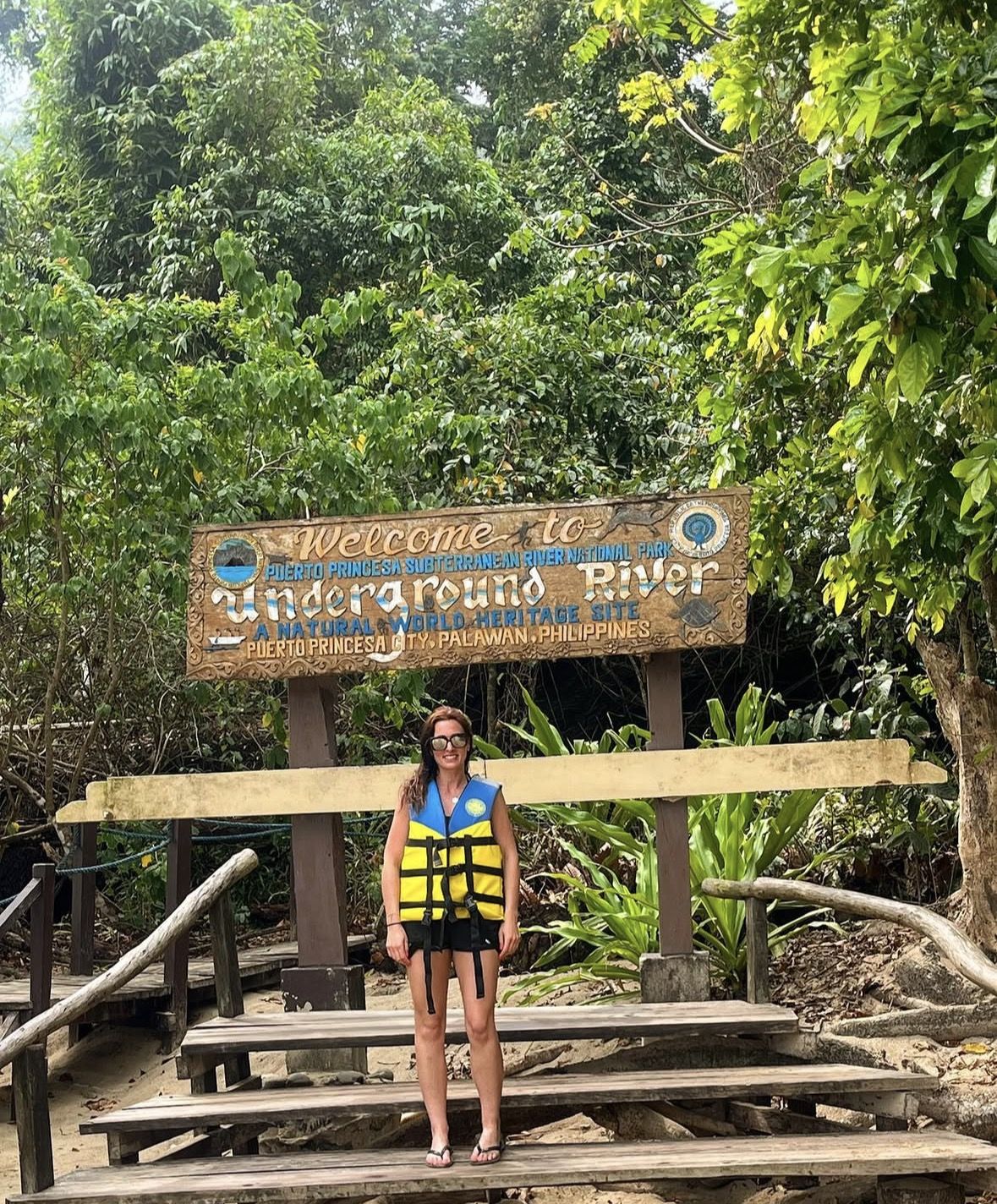
Nestled inside Saint Paul Mountain on Palawan's northwest coast, the river flows through ancient limestone karst before emptying directly into the South China Sea. The nearest access point is Sabang, roughly 80 kilometres from Puerto Princesa City.
The subterranean river runs beneath the Saint Paul Mountain Range inside Puerto Princesa Subterranean River National Park. Sabang village serves as the main gateway, sitting on a crescent bay bordered by dense rainforest and dramatic karst cliffs. A short motorised bangka (outrigger boat) ride from Sabang Wharf delivers visitors to the cave entrance, whose jagged, tooth-like opening rises dramatically from the turquoise sea. The surrounding protected area spans over 22,000 hectares of primary forest, mangroves, and coastal habitat.
The cave system was formed over millions of years as slightly acidic rainwater slowly dissolved the limestone bedrock, carving out chambers of extraordinary size. Indigenous Batak people inhabited the surrounding forests long before the site attracted scientific attention. Spanish missionaries documented the area in the 17th century, but formal geological surveys only began in the 20th century. UNESCO inscribed it as a World Heritage Site in 1999, recognising both its outstanding geological value and its remarkable biodiversity, which includes eight distinct forest formations within a single protected landscape.
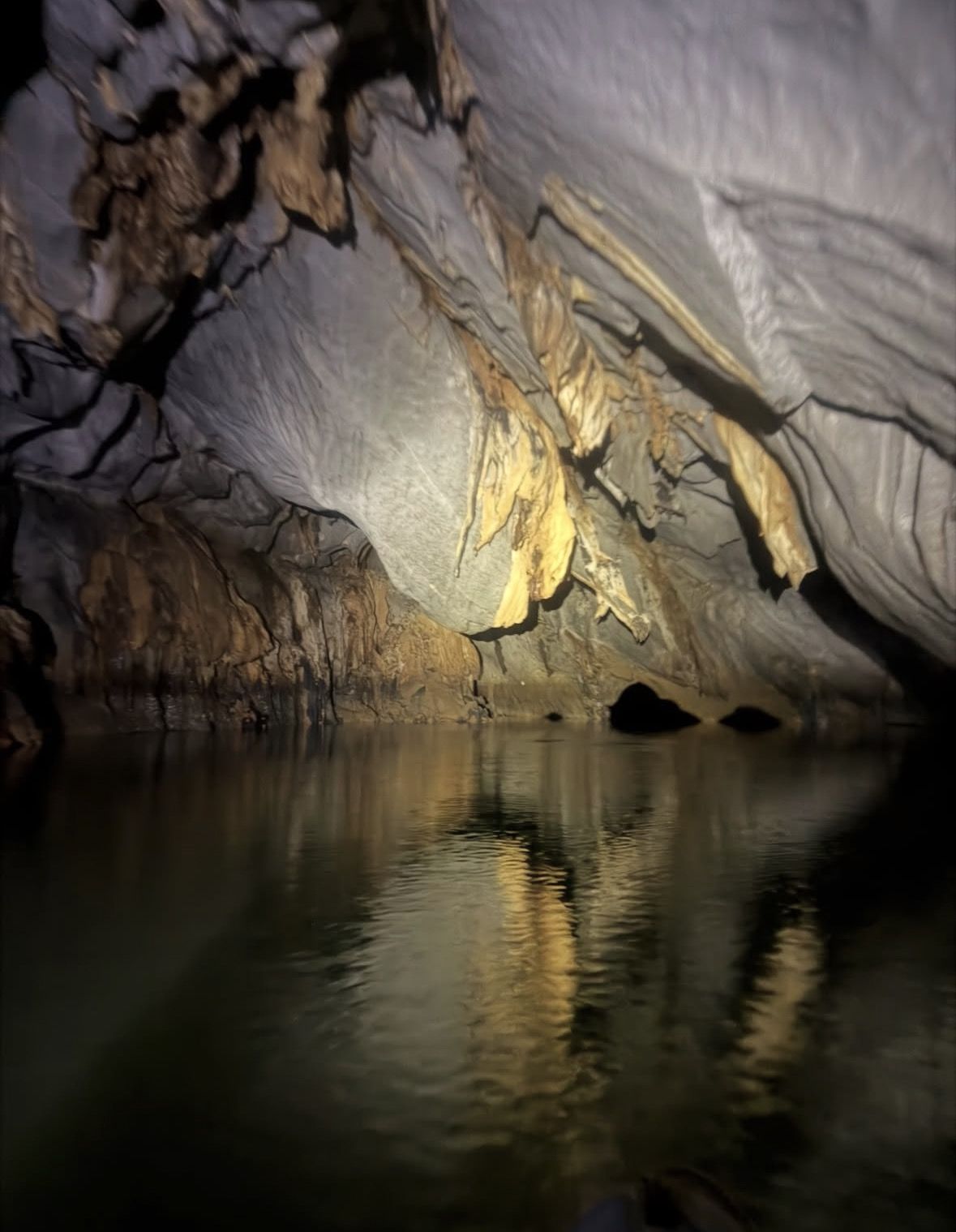
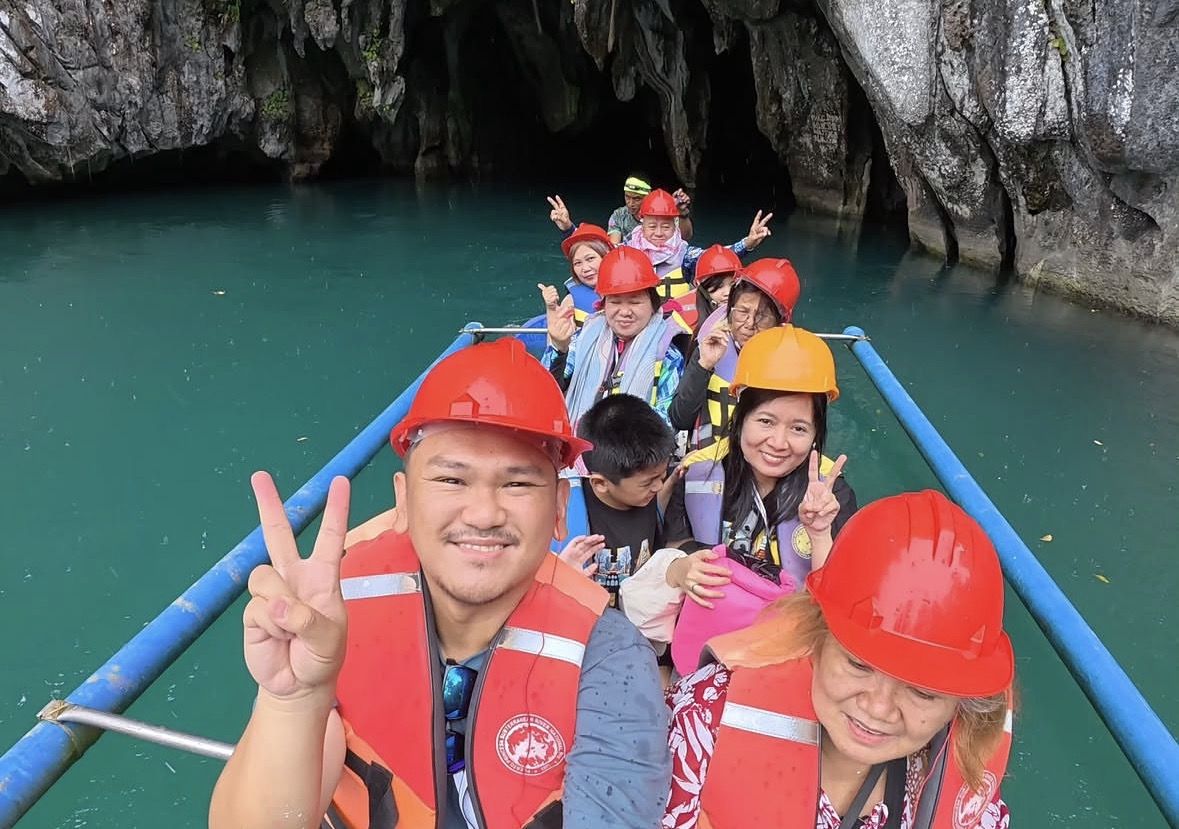
Visitors board small paddle boats at the cave entrance, donning helmets and life vests before entering the darkness. A 45-minute guided journey covers roughly 1.5 kilometres of the navigable stretch, illuminated by powerful torches that reveal the Cathedral Room, the Italian's Chamber, and formations named after the shapes they resemble. Bat colonies wheel overhead, and the air carries the cool, damp scent of deep limestone. The experience is intimate and awe-inspiring — a rare chance to float silently through a living geological archive that took nature millions of years to sculpt.
The river flows directly into the South China Sea, creating a tidal brackish zone at its mouth. This makes it one of the few cave rivers in the world where marine and freshwater ecosystems meet inside a single cave system.
Millions of bats roost in the cave's upper chambers, performing dramatic dusk exodus flights each evening. Several species are present, and their guano supports a rich food chain of insects and cave-dwelling invertebrates.
Some stalactites inside the cave reach heights of over 10 metres, built up over hundreds of thousands of years. The Cathedral Room is among the largest cave chambers in Southeast Asia, capable of fitting a full-sized cathedral inside.
The national park surrounding the cave shelters eight distinct forest formations and hundreds of fauna species, including the endangered Palawan peacock-pheasant. It represents one of the most biodiverse protected areas in the Philippines.
The Saint Paul Mountain Range is formed from ancient marine limestone, uplifted by tectonic forces millions of years ago. Erosion by slightly acidic water created the labyrinthine cave passages and the dramatic exterior karst scenery visible from Sabang Bay.
Every visitor receives a handheld audio guide narrating the cave's geological features, folklore, and ecological significance. Commentary is available in multiple languages, ensuring international travellers can fully appreciate what they are floating past.
The signature experience: a guided paddle boat journey through cathedral chambers draped in stalactites and stalagmites. Helmets, life vests, and an audio guide are provided, and the tour lasts approximately 45 minutes inside the cave.
A serene kayak or paddle boat trip through the mangrove estuary near Sabang village, home to kingfishers, monitor lizards, and proboscis monkeys. It pairs beautifully as a morning activity before your cave tour slot.
A thrilling zip-line and spelunking experience at a massive limestone rock formation near Barangay Tagabinet. Visitors spelunk through tight passages and then zip-line down to a river below — perfect for adrenaline seekers.
The crescent-shaped beach at Sabang offers calm waters, swaying palms, and a handful of laid-back beachside restaurants. It is an ideal place to decompress after the cave tour and watch the sunset over the South China Sea.
Guided nature walks through the national park's primary rainforest reveal incredible biodiversity, from giant butterflies and hornbills to endemic flora. Trails range from easy coastal paths to more demanding mountain routes for experienced hikers.
After dark, guided boat trips along mangrove-lined waterways reveal spectacular firefly displays, with thousands of synchronised lights flickering in the trees. It is one of Palawan's most magical and underrated after-hours experiences.
Weighing your options among the world's great cave river and karst attractions? Here's how each destination stacks up.
Travellers passionate about cave systems and subterranean landscapes often weigh several world-class destinations before committing to an itinerary. The Puerto Princesa Underground River ranks among the planet's finest, but Belize's Actun Tunichil Muknal, Vietnam's Phong Nha, and Malaysia's Mulu Caves each offer their own compelling appeal. This table cuts through the noise, comparing crowd levels, cost, ideal visitor types, and the unique selling point of each destination so you can choose the experience that suits you best.
| Crowds | Price | Best For | What Sets It Apart | |
|---|---|---|---|---|
| ★ Puerto Princesa Underground River | Moderate – daily caps enforced | Mid-range (₱1,500–₱3,500 with tour) | Nature lovers, UNESCO enthusiasts | River flows directly into the sea; dual UNESCO & New 7 Wonders status |
| Phong Nha Caves, Vietnam | Low to moderate | Budget-friendly | Adventure trekkers, cave divers | World's largest cave (Son Doong); multi-day expedition options |
| Actun Tunichil Muknal, Belize | Low – small group only | Premium ($200+ USD) | History & archaeology buffs | Ancient Maya ceremonial cave with skeletal remains |
| Mulu Caves, Malaysia | Low to moderate | Mid to high (remote access) | Serious cavers, wildlife fans | Largest cave passage by volume; Sarawak Chamber is record-breaking |
Each of these destinations is extraordinary, but the Puerto Princesa Underground River occupies a uniquely accessible sweet spot: a genuine geological marvel that can be experienced in a single day, priced affordably, and backed by both UNESCO and New 7 Wonders recognition. For travellers seeking a seamless blend of natural wonder, biodiversity, and cultural richness without the logistical complexity of remote expeditions, this Palawan icon remains the standout choice.
Travel Guide
Everything you need to plan a smooth, memorable visit to one of Asia's most spectacular natural sites.
Most visitors fly into Puerto Princesa International Airport, which receives daily flights from Manila (approximately 1 hour 20 minutes), Cebu, and other Philippine hubs. From the airport, the city centre is a short tricycle or van ride away. International travellers typically connect through Manila's Ninoy Aquino International Airport before boarding a domestic carrier such as Cebu Pacific, Philippine Airlines, or AirAsia to Puerto Princesa.
From Puerto Princesa City, travellers reach Sabang Wharf — the jumping-off point for the cave — via a roughly 1.5 to 2-hour road journey covering about 80 kilometres. Options include joining an organised day tour (the most convenient choice), booking a private van or SUV, or taking a public van from San Jose Terminal. From Sabang Wharf, a short motorised bangka (outrigger boat) crosses the bay to the cave entrance in around 15 minutes.
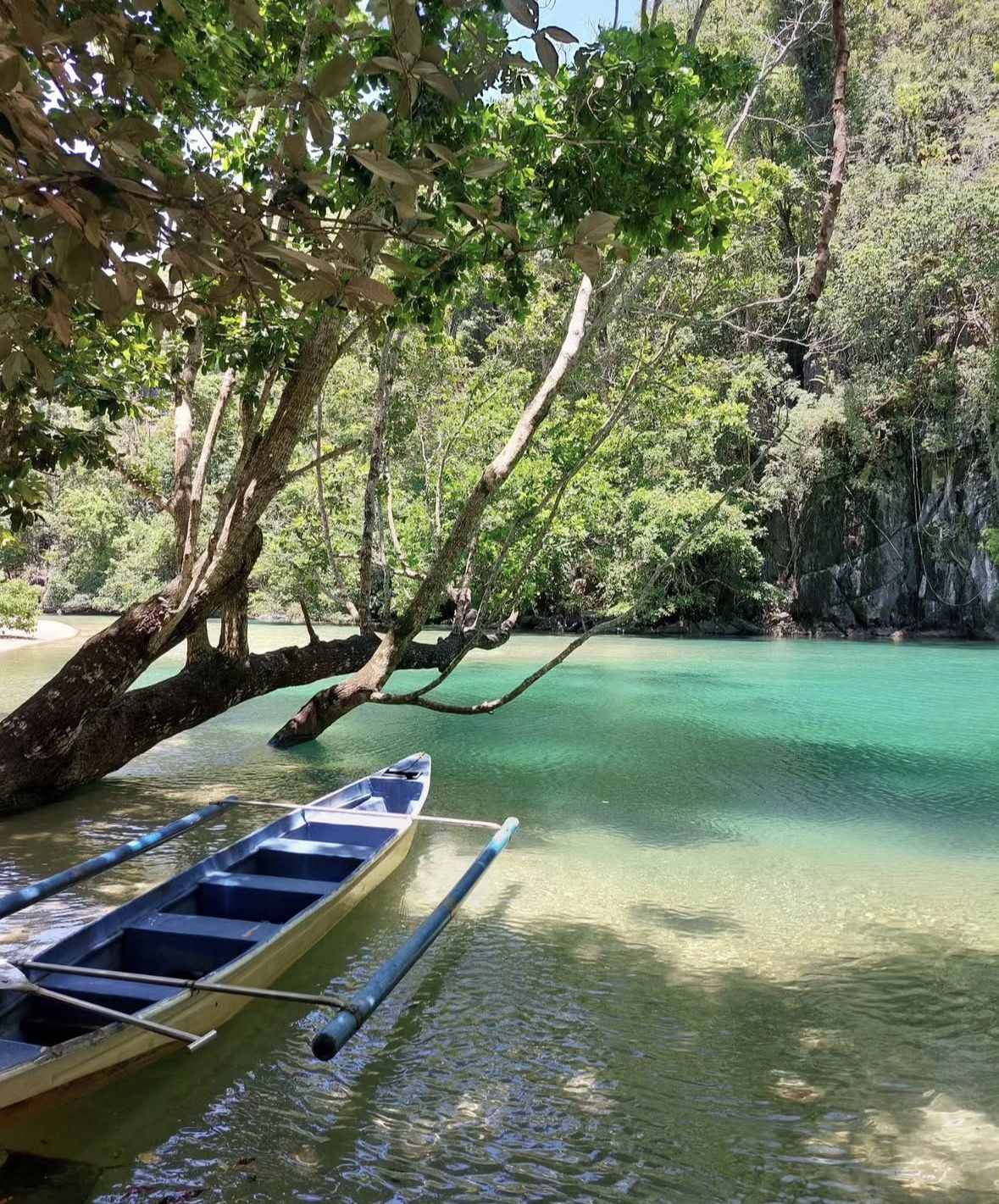
The ideal window to visit is during the dry season, which runs from November through May. Skies are clearer, seas are calmer for the bangka crossing, and the unpaved road to Sabang is far more passable. February to April tends to offer the most reliably sunny days with lower humidity. Booking several weeks ahead during the Christmas and Easter holidays is essential, as permits sell out rapidly during these peak periods.
Palawan experiences a tropical climate with two distinct seasons. The wet season from June to October brings heavy rainfall, strong winds, and occasional typhoon activity that can force temporary closure of boat services. Even in the dry season, brief afternoon showers are common. Mornings generally offer the calmest sea conditions for the Sabang crossing, making an early start both practically and aesthetically rewarding — the bay is often glassy and beautifully lit at dawn.
Comfort and practicality are key when packing for a cave river tour. Lightweight, quick-dry clothing is ideal for the humid cave environment and the boat crossing. Waterproof bags or dry sacks protect electronics and valuables from sea spray. Helmets and life vests are provided by tour operators, so you needn't bring your own. A small day pack is sufficient — bulky luggage should be left at your accommodation in Puerto Princesa City.
Footwear deserves special attention: sandals with heel straps or water shoes are perfect for the beach and boat sections, while closed-toe shoes with grip are better if you plan to walk forest trails in Sabang. Sun protection is essential on the open water crossing, and insect repellent becomes important at dusk near the mangroves. A lightweight rain jacket is wise even in dry season, as afternoon showers can appear without warning.
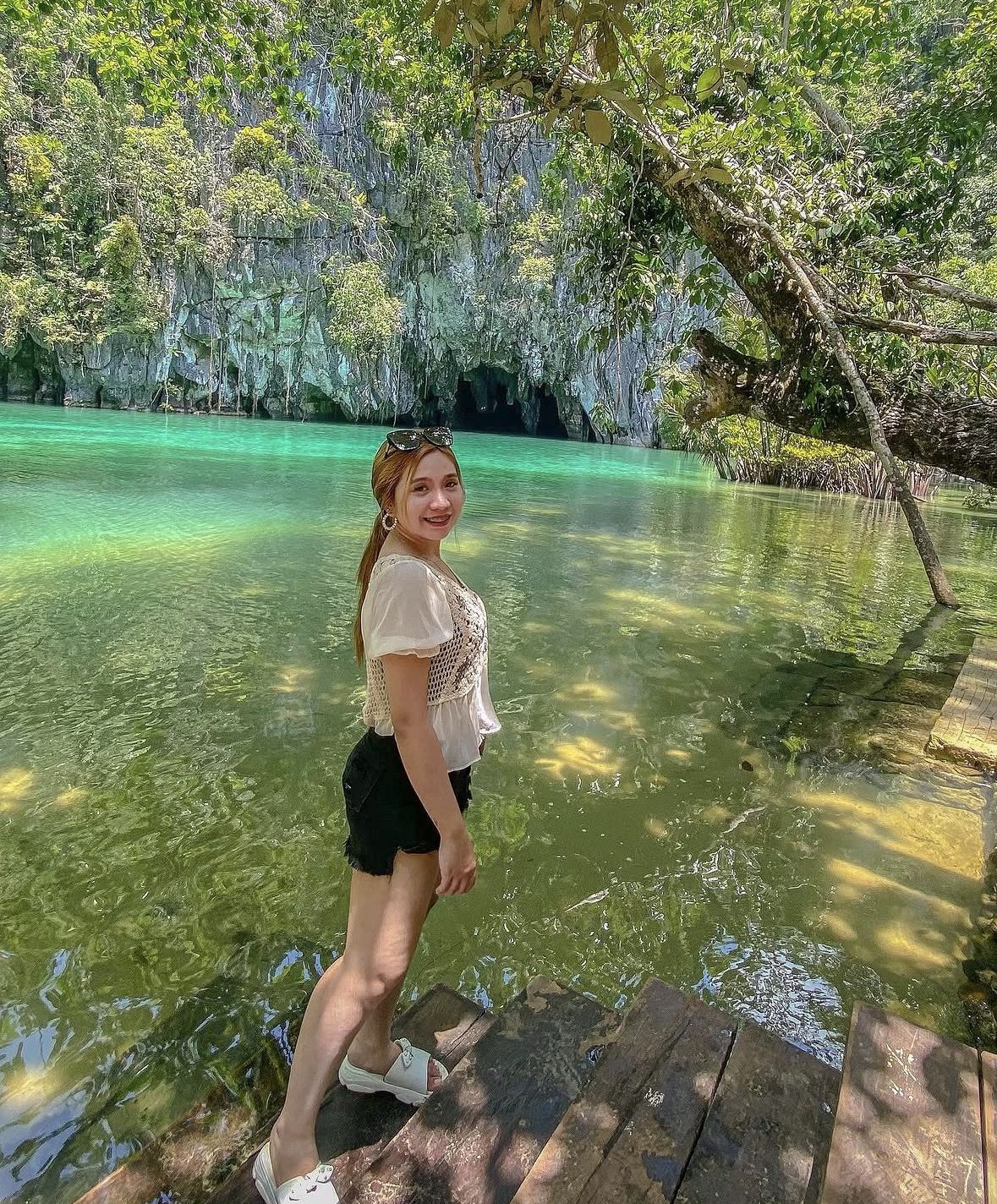
Book your visitor permit as early as possible — ideally weeks ahead during high season — directly through the City Environment and Natural Resources Office (CENRO) website or via a licensed tour operator. Avoid unlicensed touts who offer permits at inflated prices near the wharf. Guides are local community members whose livelihoods depend on responsible tourism, so tipping generously after a great tour is both customary and appreciated.
Bring small Philippine peso bills for tips, snacks, and incidentals at Sabang, as card payment is rarely accepted at beachside stalls. The entrance area has a basic restaurant serving Filipino lunch sets, and most organised tours include a meal. Mobile signal at Sabang is patchy — download offline maps before leaving Puerto Princesa City. Respect the 'no flash photography' rule inside the cave strictly; it disorients the bat colonies and is enforced by guides.
No specific vaccinations are required for visiting Palawan, though standard travel immunisations — including hepatitis A, typhoid, and tetanus — are recommended. Mosquito-borne illnesses including dengue fever are present in the region, so daily application of insect repellent is a sensible precaution. Travellers with respiratory conditions should be aware that the cave environment is damp and the air near large bat colonies can carry fungal spores, so consult a doctor if you have concerns.
Inside the cave, helmets and life vests are mandatory and provided by the tour operator — never enter without them. The bangka crossing can be choppy during windy periods; if you are prone to seasickness, take precautions beforehand. Keep hands away from cave formations, and never stand in the boat. Emergency services in the Sabang area are limited; the nearest hospital is in Puerto Princesa City, so carry a basic first-aid kit and any personal medications you may need.
Explore More
Make the most of your time in Palawan by exploring the incredible attractions surrounding Sabang and Puerto Princesa City.
The Puerto Princesa: UNESCO Underground River Day Tour takes you deep into one of the planet's most extraordinary natural wonders.
Check this tour →The Underground River Day Trip from Puerto Princesa City is your gateway to one of the planet's most extraordinary natural spectacles.
Check this tour →The Puerto Princesa Underground River Day Tour invites you to paddle deep into a cathedral of ancient rock, where stalactites drip from cathedral ceilings and rare swiftlets dart…
Check this tour →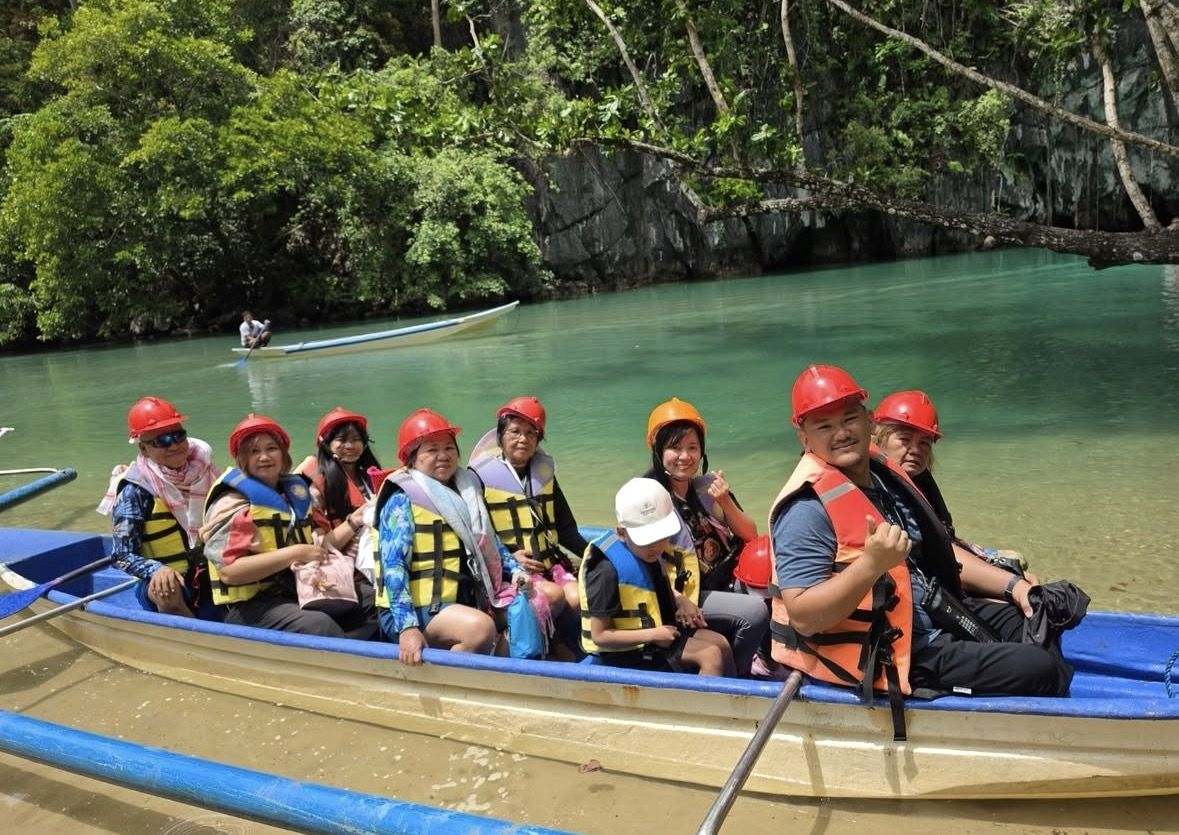
The Full-Day Puerto Princesa: UNESCO Underground River Tour takes you on an awe-inspiring journey through one of the planet's most celebrated natural wonders.
Check this tour →The Underground River Tour from Puerto Princesa takes you deep into one of the world's most awe-inspiring natural wonders.
Check this tour →Traveler Reviews
Travelers from around the world share their awe-inspiring experiences visiting the Puerto Princesa Underground River, one of nature's greatest wonders.
"Gliding through that vast limestone cave on a small wooden boat was one of the most surreal experiences of my life. The stalactites hanging overhead were enormous, and our guide pointed out formations shaped like everything from curtains to cathedral ceilings. I was genuinely speechless at the sheer scale of the chambers. Wearing a helmet and life vest felt a little goofy at first, but I completely understood why — the cave is wild and untamed in the best possible way. Absolutely worth every effort to get here."
"We booked a full-day tour from Puerto Princesa City and it was seamlessly organized — transport, permits, and the boat ride were all included. The moment our little paddle boat entered the cave mouth, the temperature dropped and the darkness wrapped around us in the most dramatic way. Thousands of bats rustled overhead, which was both eerie and incredible. The audio guide was genuinely informative and helped us appreciate the geology we were floating through. One of the top travel highlights of my entire life."
"The cave itself is absolutely stunning — the formations inside are unlike anything I have seen elsewhere in Southeast Asia. We did have to wait about an hour at Sabang Wharf before our boat departed, so I'd strongly recommend arriving early or booking during off-peak hours. The mangrove paddle boat ride to the cave entrance was a lovely bonus we hadn't anticipated. I'm giving four stars only because of the crowds, but honestly the wonder of the place more than compensates. Come prepared with patience and you'll leave amazed."
"Standing at the jagged cave entrance watching the river flow straight into the sea was a moment I'll never forget. The biodiversity around Sabang is remarkable even before you enter the cave — monitor lizards wandered along the beach completely unbothered by tourists. Our boatman was fantastic, steering smoothly while narrating the highlights with obvious pride in his home. The Puerto Princesa Underground River lives up to every superlative I had read about it beforehand. Book early, secure your permit, and just go."
"This was our first time in Palawan and we chose this as our anchor experience — it did not disappoint for a single second. The boat ride through the cave felt like entering another planet, with enormous chambers opening up one after another in the torchlight. I loved that the guides pointed out formations with names like the Cathedral and the Italian Candle. The whole site feels pristine and well-protected, which gives you real confidence that future generations will enjoy it too. Truly a world-class natural attraction."
"The cave tour itself is magnificent and completely justifies the journey from the city. I do wish the navigable portion open to tourists were slightly longer, as it felt like we were just getting into the rhythm of the experience when we turned back. That said, what you do get to see — the towering rock formations, the bats, the crystal-clear dark water — is genuinely breathtaking. The surrounding beach at Sabang is also beautiful and made for a wonderful lunch stop afterward. A very strong four stars."
"I had high expectations after reading so much about this place, and somehow it still exceeded all of them. The scale of the limestone karst formations inside is impossible to capture in photographs — you simply have to be there. Our guide had a wonderful sense of humor and kept the mood light even as we floated through some genuinely cavernous and slightly intimidating sections. Getting there by van and then pump boat from Puerto Princesa was easier than I expected. An unmissable experience in the Philippines."
"We visited in early December, which turned out to be perfect timing — the dry season means calmer seas for the transfer boat and clearer skies for the beach. The cave tour itself lasts around 45 minutes and every minute of it is filled with wonder; I kept leaning over the side of the boat trying to see how deep the water was. Monkeys greeted us on the beach near the cave entrance, which added a lovely wildlife element to the day. This UNESCO-listed site is managed with obvious care and respect for the environment. Highly recommend budgeting a full day for the complete experience."
Watch Before You Go
Watch stunning footage of the cave river, its towering formations, and the wildlife that calls this UNESCO wonder home.
Location
Puerto Princesa Subterranean River National Park, Sabang, Puerto Princesa, Palawan, Philippines — approximately 80 km northwest of Puerto Princesa City.
FAQ
Everything you need to know before visiting one of the Philippines' most celebrated natural landmarks, answered clearly and honestly.
Ready to paddle through one of the world's great natural wonders?
Book Your Tour NowDiscover More
Ancient limestone laid down beneath a prehistoric sea was slowly sculpted by millennia of rainfall and tectonic upheaval into one of the planet's most extraordinary cave systems. From indigenous Batak stewardship to UNESCO recognition, the story of this subterranean wonder spans deep time and human history alike.